Technologies Used:
Unity, C#, Blender, Adobe Photoshop, Figma
In my second year of university I was tasked with redesigning volunteer materials for use in a museum in York. This was for the User Experience module, which focused heavily on UXD princples and allowed me to put these into practice by creating a functional prototype. The process I followed involved user and market research to determine the objectives for my prototype, user stories to understand how the prototype would be used in practice, design iterations to develop and improve features, and programming to implement the final prototype. The project brief was to redesign materials used to educate volunteers on the different aspects of the museum. As a result, the main focus of the prototype is to deliver a large amount of information in an accessible and intuitive way that doesn't put too much mental strain on the user.
I began with user and market research. The existing volunteer materials consisted of text heavy documents and long videos, and so I created a questionaire to gather opinions on the pros and cons of these materials, as well as discover what people would prefer to see instead. For example, I learnt that some people struggled to read through all of the text on the documents, and so I knew to explore alternative ways of delivering information. Market research allowed me to explore existing solutions and what features allow for a successful prototype. A research focus on learning platforms revealed that gamified learning, a way of teaching people by utilising aspects of a game such as interesting graphics or gameplay mechanics, was often more popular and effective than reading lots of text. From this information, I created user stories to highlights potential users and how they might interact with a system. For example, one user may struggle to concentrate with lots of text but can find ten minutes a day to browse through an online learning platform.
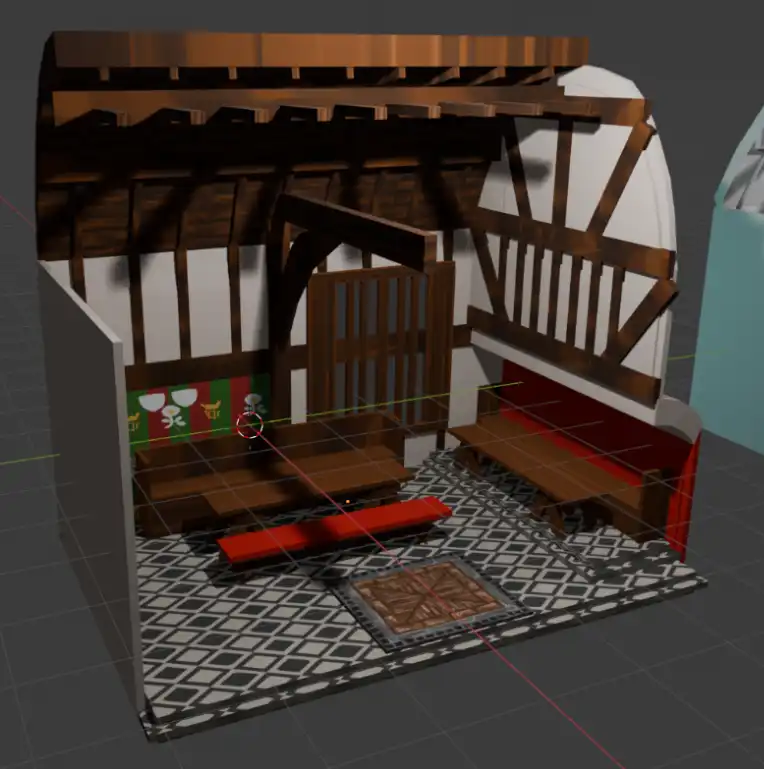
All of this research began to come together in the design stage. After analysing the results of my research, I decided that an online learning platform with a simplified layout and interactive graphics would be a more beneficial way of learning. I began by sketching out potential wireframe layouts on paper. The use of rough sketches allowed for me to generate lots of ideas and narrow it down from there. I focused on aspects of the GUI, such as menus, graphics and buttons, and later organised them together into a complete layout. With this layout, I used Figma to create a more polished layout from which I could begin the development process. The final layout consists of a panel on the left where users can see the rooms in the museum and a dropdown of the objects within each room. The centre displays a 3D model of the room with the objects in it, helping the user to understand what is being spoken about. On the right is a section where a description of the selected object can be viewed.
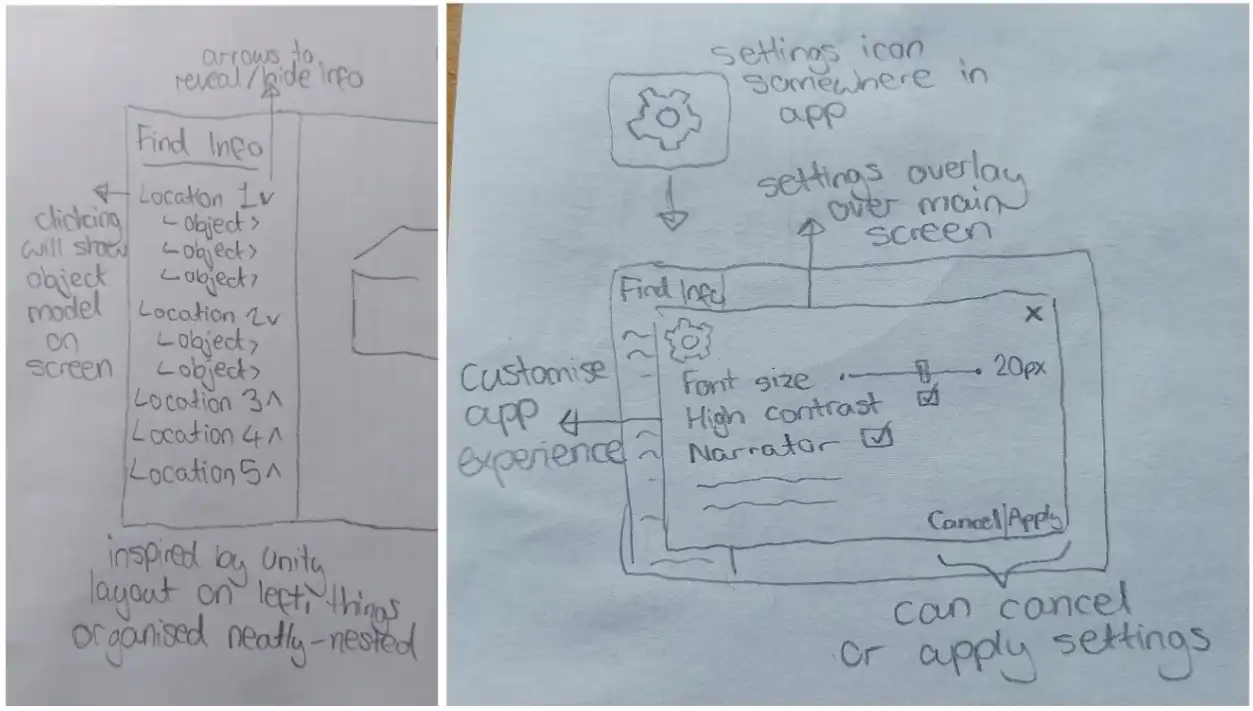
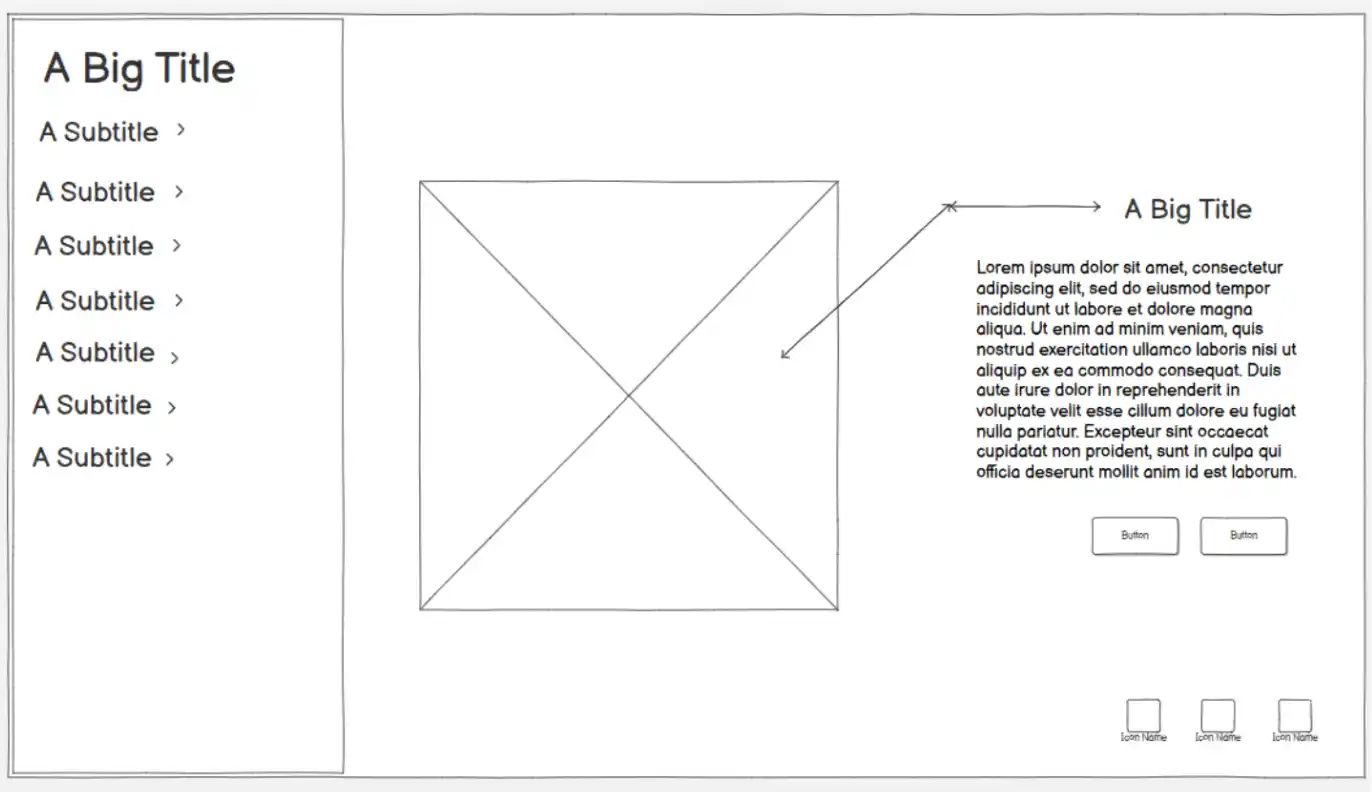
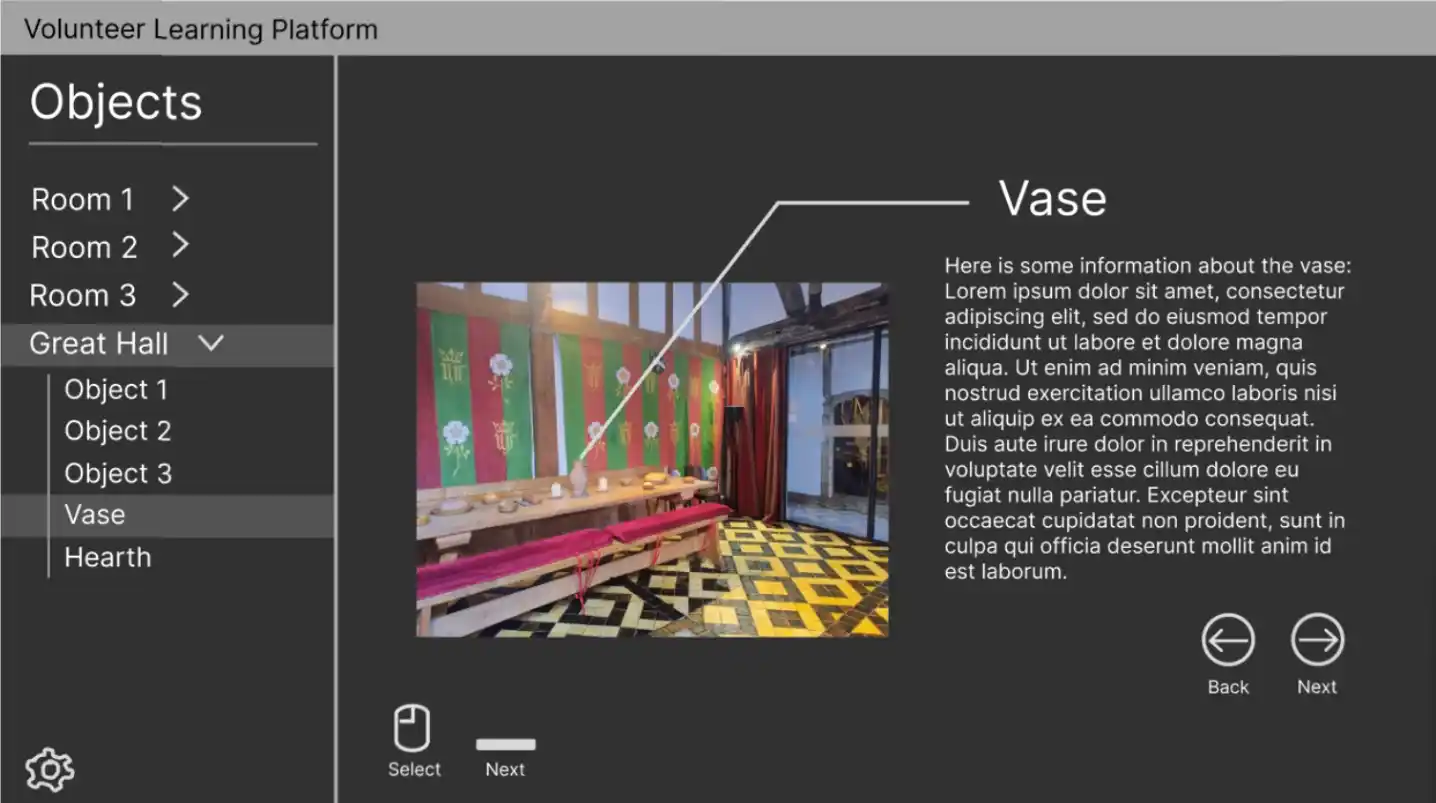
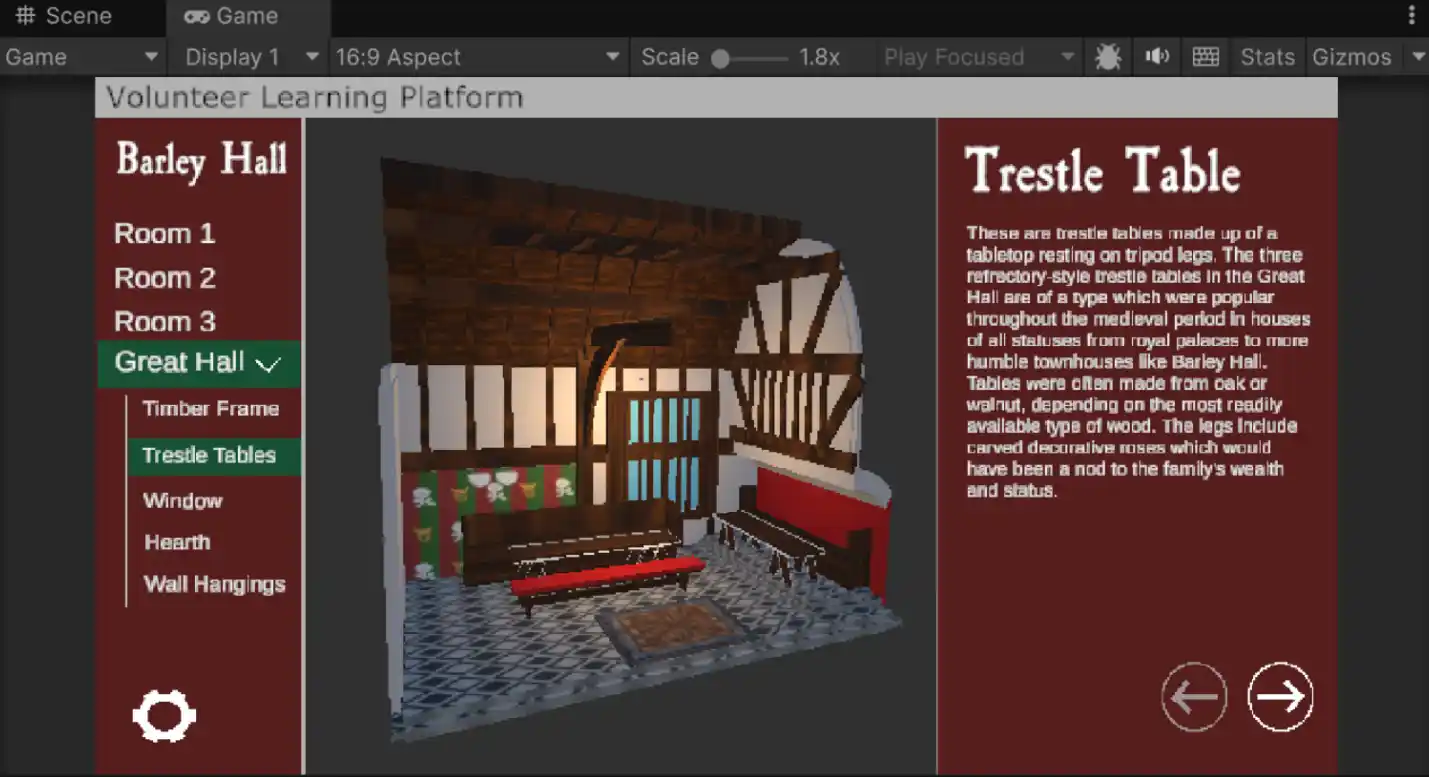
Evolution of wireframe layouts from paper (top left) to final prototype (bottom right).